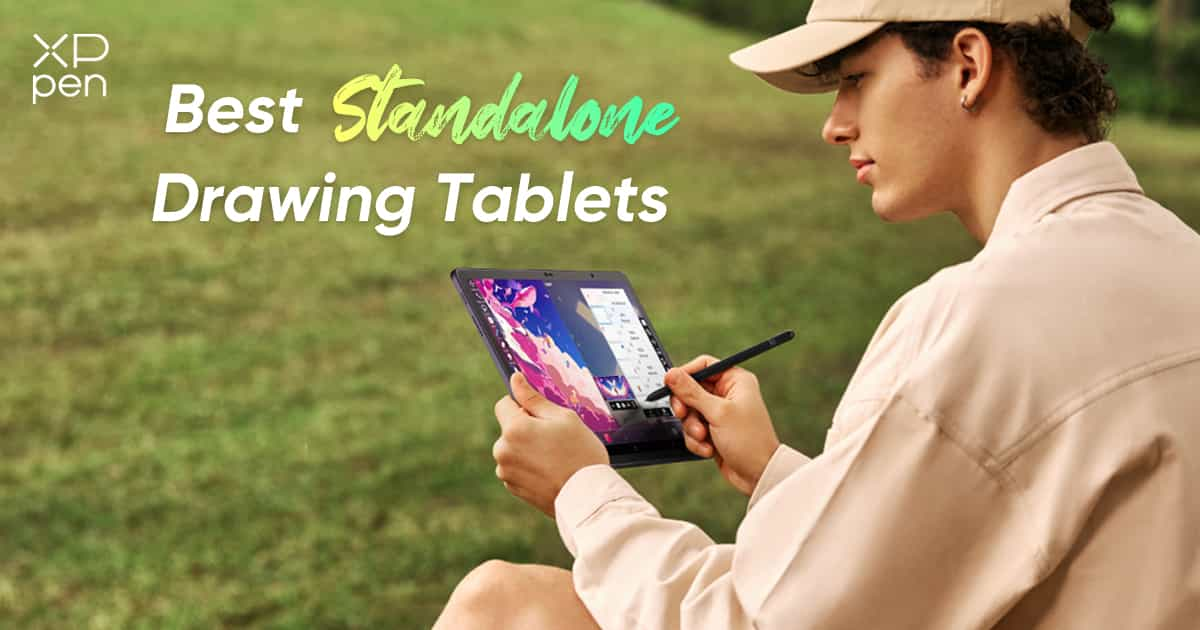
7 Best Standalone Portable Drawing Tablets Without Computer
ROUNDUPSStandalone drawing tablets are self-sufficient devices that offer the freedom to create without the need for a PC or laptop. Packed with hardware and software, these tablets are perfect for artists, graphic designers, and creatives on the go.
In this comprehensive guide, we'll explore the key features to consider when choosing a standalone drawing tablet, and introduce you to the top models currently available, including XPPen Magic Pro 13 .
Part 1. Best Standalone Portable Drawing Tablets Without Computer
So, in view of the advantages offered by these devices, let's see what are the best stanalone drawing tablets with stylus that you can find on the market. In addition, to make things easy for you, we have prepared with models of different price ranges, so that you can find the device that best fits your budget.
1. XPPen Magic Drawing Pad
Price: $499(include stylus)
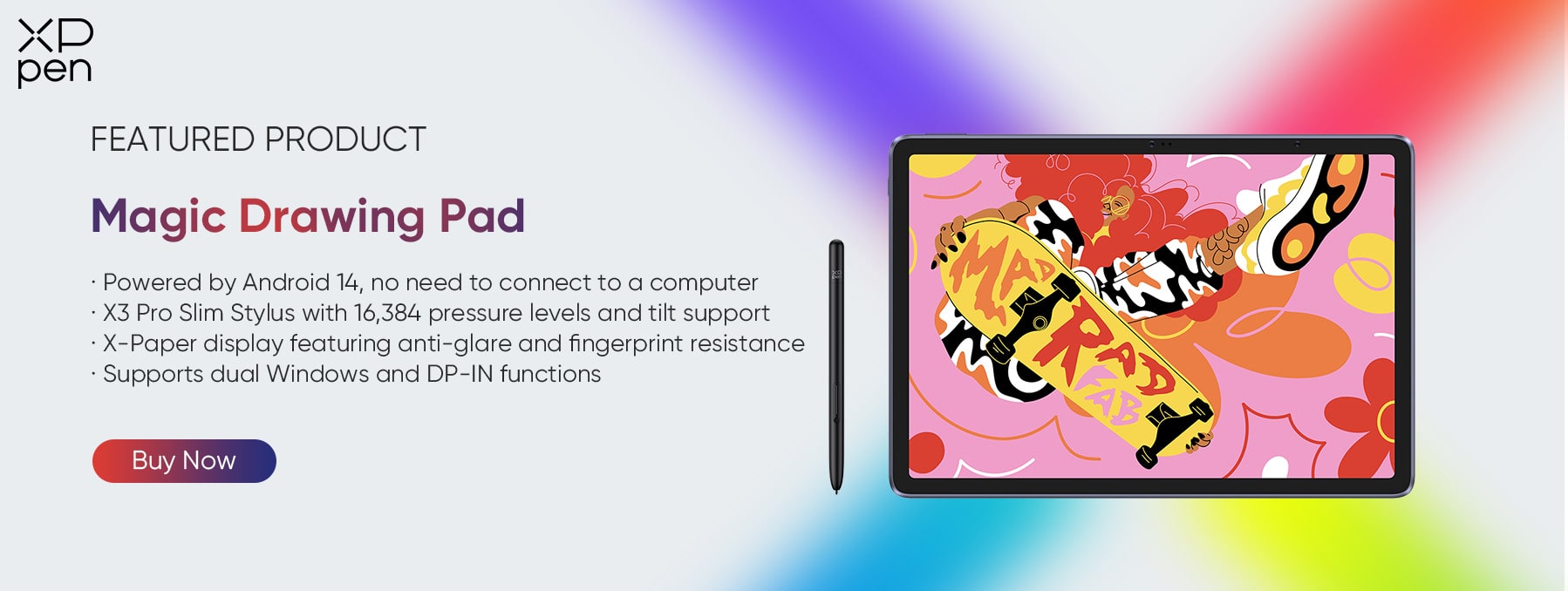
People who often use drawing tablets must be familiar with the XPPen brand. And it launched an Android tablet named Magic Drawing Pad . Different from previous drawing tablets required a computer connection, the Magic Drawing Pad is powered by the Android 15 operating system, allowing it to be used independently.
Key Features of Magic Drawing Pad:
Super portable : The Magic Drawing Tablet is 6.9mm thick and weighs only 590 grams. You can easily take it anywhere.
Powered by Android 15 : Featuring the latest operating system, Android 14, users can enjoy an enhanced user experience and improved application compatibility.
X3 Pro Stylus and EMR Technology : Unlike most tablets, the Magic Drawing Tablet is equipped with the X3 Pro Slim Stylus, which has 16,384 levels of pressure sensitivity. In addition, with advanced EMR technology , X3 Pro Slim Stylus delivers a digital drawing experience that feels as intuitive and natural as pen on paper.
X Paper : X-Paper is crafted with AG etched technology to emulate the friction and resistance of premium paper as you move the stylus across the surface of the pad, while reducing unwanted glare and fingerprints.
Pros
-
Powered by Android 15, no need to connect to a computer
-
X3 Pro Slim Stylus with 16,384 pressure levels and tilt support
-
X-Paper display featuring anti-glare and fingerprint resistance
-
8000mAh, up to 13 hours of battery life
-
6.9mm slim, 590g light, super portable.
-
Clip Studio Paint and ibis Paint X 3-month free membership
-
Supports dual Windows and DP-IN functions
2. XPPen Magic Pro 13
Price: $899
Looking for a standalone drawing tablet that combines powerful performance, a high-quality display, and professional drawing capabilities? The XPPen Magic Pro 13 is an excellent option worth considering.
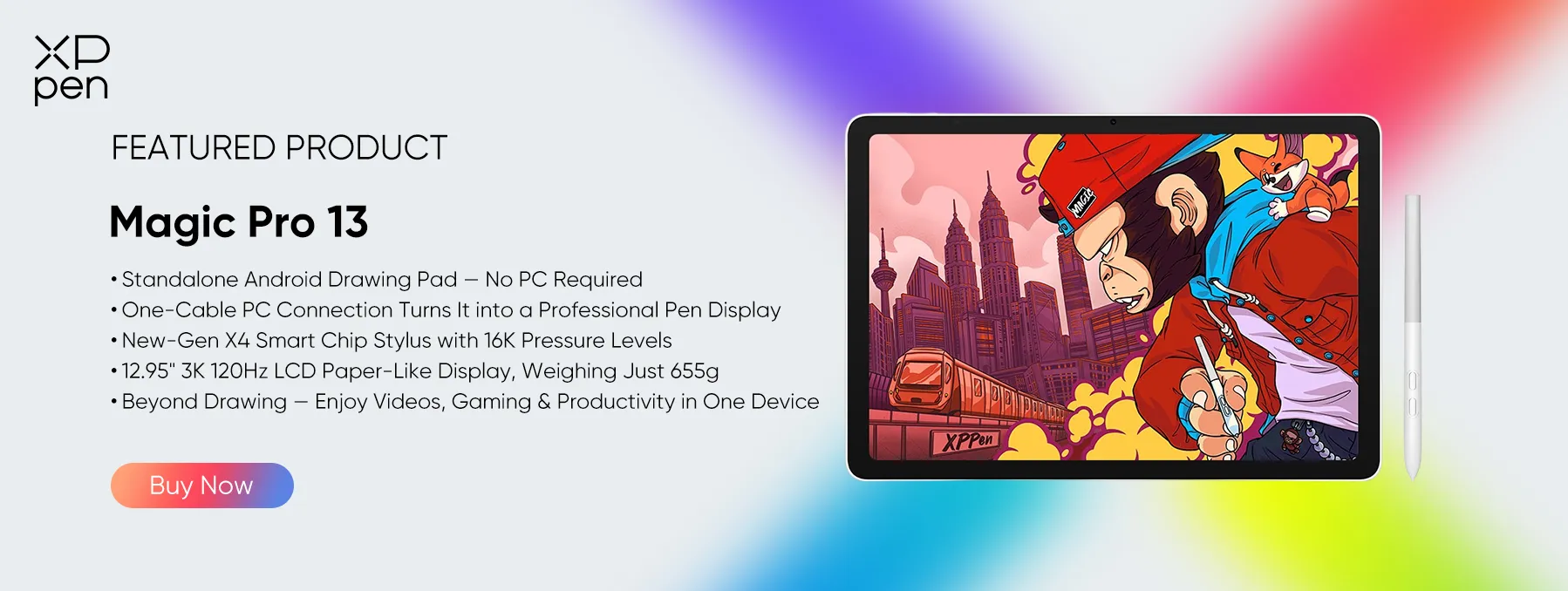
Unlike traditional drawing tablets that rely entirely on a computer, the Magic Pro 13 offers two creative modes in one device. Powered by Android 16 and the MediaTek Dimensity 8300 processor, it allows artists to draw independently without connecting to a computer. When more advanced desktop workflows are needed, its industry-first Drawing Display Mode lets users connect it to a PC with a single USB-C cable, transforming it into a professional pen display.

Key Features:
-
3K 120Hz Paper-like Display: The 12.95-inch display features a 3096 × 2064 resolution and a 120Hz refresh rate, delivering sharp details, vibrant visuals, and smooth pen movement. Its 100% sRGB and 96% DCI-P3 color gamut make it suitable for digital illustration, graphic design, and other color-sensitive creative projects.
-
X4 Smart Chip Stylus: The included X4 Smart Chip Stylus supports 16,384 pressure levels and a 2g initial activation force. It accurately captures subtle changes in pen pressure, allowing artists to create expressive lines, delicate details, and natural shading.
-
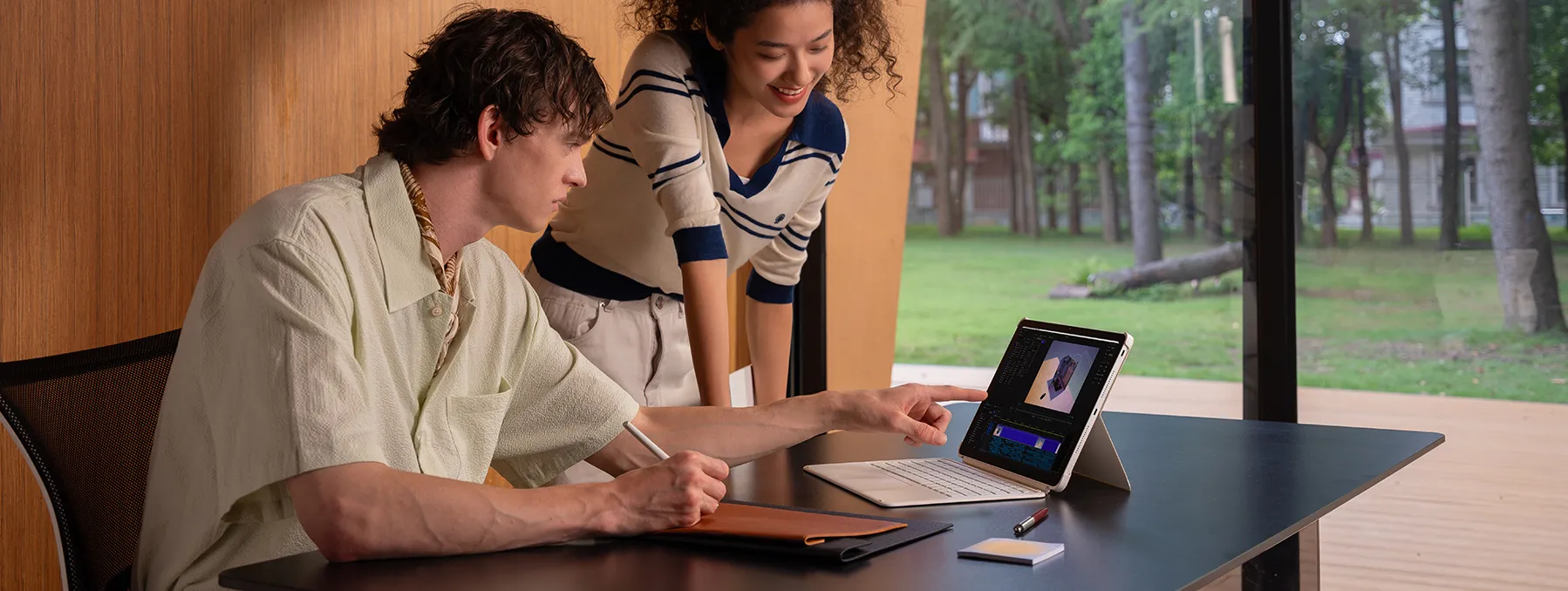
Dual Creative Modes: The Magic Pro 13 works as both an independent Android drawing tablet and a professional drawing display. Artists can sketch and create on the go, then connect it to a computer through a single USB-C cable when they need a desktop-based creative workflow.
-
Powerful Hardware: Equipped with a MediaTek Dimensity 8300 processor, Android 16, and a 10,200mAh battery, the Magic Pro 13 provides a capable standalone creative experience for drawing, multitasking, and everyday entertainment.
-
Paper-like Drawing Experience: Its AG+AF nano-etched glass surface helps reduce reflections and fingerprints while providing a more natural drawing feel, making extended creative sessions more comfortable.
Best For: Digital artists, illustrators, and creative professionals who want the flexibility of a standalone drawing tablet without sacrificing the option of a computer-connected professional drawing experience.
3. Apple iPad Pro 11‑inch
Price: From $999
The Apple iPad Pro is one of the strongest alternatives to dedicated Android drawing tablets. Its main advantage is the combination of high-performance hardware, a premium display, and a well-established creative application ecosystem.
Artists can use compatible applications for digital painting, image editing, graphic design, animation, and multimedia production.
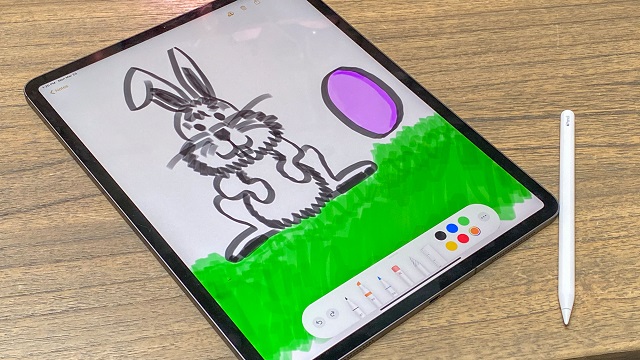
Key Features:
-
Ultra Retina XDR display: 2420×1668 resolution. ProMotion technology with adaptive refresh rates from 10Hz to 120Hz:
-
Models with 256GB or 512GB storage: Apple M4 chip. 9-core CPU with 3 performance cores and 6 efficiency cores, 10-core GPU, 8GB RAM.
-
Face ID: Unlock iPad, secure personal data within apps.
-
Operating System: iPadOS 17
-
Supports Apple Pencil (USB‑C) and Apple Pencil Pro.
Pros
-
OLED display
-
Apple Pencil Support
-
Up to 10 hours of battery life
-
High performance as a productivity tool
Cons
-
APPle Pencil: Active capacitive stylus, only 4,096 level pressure sensitivity.
-
High Price
-
Pen Sold Separately
4. Microsoft Surface Pro 9
Price: From $990
The Microsoft Surface Pro 9 occupies a different position from conventional Android and iPad drawing tablets. It is essentially a Windows computer in a portable tablet design. This matters because it can run compatible desktop applications rather than relying exclusively on mobile versions.
For artists who already use Windows software, this can make Surface a practical option.
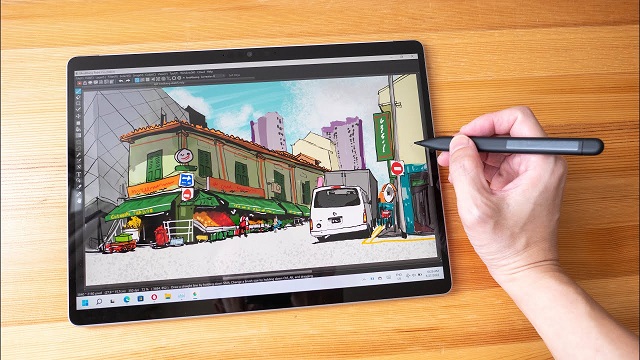
Key Features:
High-resolution Display : The PixelSense display boasts a resolution of 2880 x 1920 pixels and a 120Hz refresh rate, ensuring smooth and crisp visuals.
Powerful Hardware: : The Surface Pro 9 is available in multiple configurations, ranging from 12th Gen Intel Core i5 to i7 processors, with options for 8GB, 16GB, or 32GB of RAM and up to 1TB of storage.
Slim Pen 2 : The included Slim Pen 2 offers tilt and pressure sensitivity (4096 levels), providing precise and natural drawing experiences.
Extensive Software Compatibility : As a Windows tablet, it runs full versions of PC art programs, allowing users to work on fully realized and professional final versions of their artwork.
Pros
-
Full Windows compatibility for a wide range of drawing and design software.
-
Excellent display quality with high resolution and refresh rate.
-
Powerful hardware options for smooth performance.
Cons
-
High Price
-
Pen Sold Separately
5. Samsung Galaxy Tab S9 Ultra
Price: From $1,049
Screen size can have a significant influence on drawing comfort. A smaller tablet is easier to carry, but a large screen offers more room for the canvas, toolbars, and reference images. The Samsung Galaxy Tab S9 Ultra is particularly interesting because of its 14.6-inch Dynamic AMOLED 2X display.
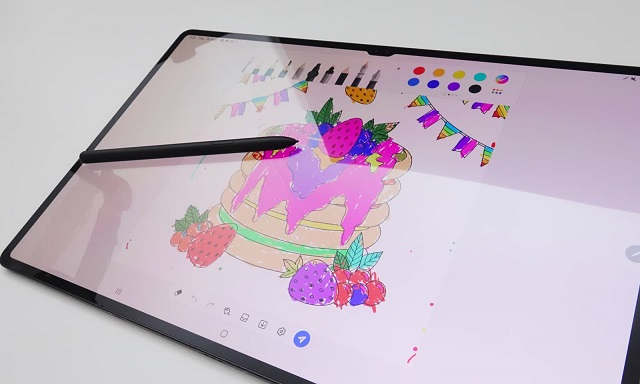
Key Features:
14.6-inch Super AMOLED Display : Offers a high-resolution, vibrant display with deep blacks and excellent contrast.
Included S Pen: : Provide 8,192 levels of pressure sensitivity
Expandable Storage : The inclusion of a microSD slot for expandable storage adds flexibility for users with large media libraries.
Pros
-
The large Super AMOLED screen with a high resolution(2960 x 1848) offers excellent color accuracy.
-
The large battery provides long-lasting power, supporting extended use without frequent recharging.
-
The inclusion of a microSD slot for expandable storage adds flexibility for users with large media libraries.
Cons
-
High Price
-
Not very portable
6. HUAWEI MatePad Pro 12.6-inch
Price: From $1,347
The HUAWEI MatePad Pro 12.6-inch combines a large OLED display with stylus support and a high-capacity battery. It is an older tablet generation, but it may remain relevant in markets where compatible devices are available at competitive prices.
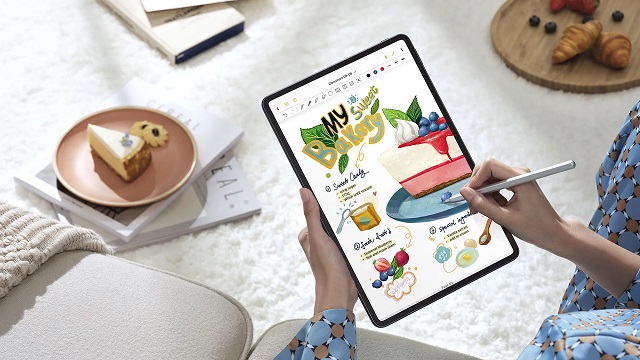
Key Features:
12.6-inch OLED Display : Features a high-resolution 2560 x 1600 pixels OLED screen with vivid colors, deep blacks, and high contrast.
120Hz Refresh Rate : Provides smooth scrolling and responsiveness for a fluid user experience.
Kirin 9000E Processor : Equipped with Huawei's powerful Kirin 9000E chipset, delivering robust performance for multitasking and demanding applications.
M-Pencil Support : Offers low latency and high precision for drawing, note-taking, and creative tasks. Attaches magnetically and charges wirelessly.
Pros
-
High-Quality Display
-
The large battery supports extended use, making it suitable for a full day of work or entertainment.
-
5G Connectivity is vailable on cellular models, allowing for fast and reliable internet access on the go.
Cons
-
High Price
-
HarmonyOS Limitations
-
4,096 level pressure sensitivity, not very high.
7. Xiaomi Mi Pad 5 Pro
Price: From $400
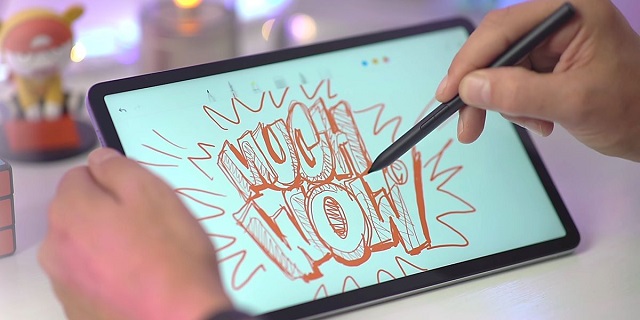
Not everyone needs a premium standalone drawing tablet. For someone learning digital art, practicing basic sketches, or experimenting with illustration applications, an older Android tablet may provide enough functionality. The Xiaomi Pad 5 Pro is one such option.
Although it is an older device, its high-resolution display and Snapdragon 870 processor can still make it relevant for basic creative tasks, depending on the condition and software support of the specific unit.
Key Features:
Display : 11-inch LCD display with a 120Hz refresh rate and a resolution of 2560 x 1600 pixels. This high refresh rate and resolution make it ideal for drawing and note-taking, providing a smooth and clear visual experience.
Performance : It is powered by the Qualcomm Snapdragon 870 processor, which offers robust performance for multitasking and handling graphic-intensive applications.
Battery : The tablet has a sizable battery capacity that supports long usage times, ideal for extended drawing or note-taking sessions.
Pros
-
High-resolution display with a 120Hz refresh rate.
-
Excellent battery life with fast charging support.
Cons
-
Lacks high-end features such as pressure sensitivity.
-
Limited software ecosystem compared to iPadOS or Samsung UI, with fewer optimized apps available
Part 2. Why Choose a Standalone Drawing Tablet?
A standalone drawing tablet is more than a portable graphics tablet. It combines a display, processor, operating system, and drawing software in one device, allowing artists to create without relying on a computer.
Its advantages go beyond portability.
1. Create Anywhere Without a Workstation
A standalone tablet lets you open a drawing application, create a canvas, work with layers, and export artwork directly from the device.
This is especially useful for:
-
Outdoor sketching: Capture landscapes, architecture, and ideas on the go.
-
Travel illustration: Continue creative projects without carrying a laptop.
-
Classroom learning: Combine drawing, note-taking, and study tasks.
-
Creative brainstorming: Quickly turn ideas into visual concepts.
The biggest advantage is reducing the time between inspiration and creation.
2. Enjoy a More Flexible Creative Workflow
Standalone tablets can support multiple stages of digital art, from rough sketches and composition development to coloring and exporting.
Some projects may still require desktop software for advanced editing. Devices such as the XPPen Magic Pro 13 offer additional flexibility through standalone Android operation and PC-connected Drawing Display Mode.
This allows artists to move between mobile sketching and a computer-based workflow using one device.
3. One Device for Creativity and Everyday Tasks
Depending on the operating system, a standalone tablet can also be used to:
-
Browse the internet and watch tutorials.
-
Read books and take notes.
-
Attend online classes.
-
Manage documents and reference images.
-
Communicate with clients.
-
Organize creative projects.
This versatility makes standalone tablets appealing to students and hobbyists who want one device for multiple purposes.
4. Make Creative Learning More Convenient
Beginners often need to switch between tutorials, reference images, and drawing applications. A standalone tablet makes this process easier. You can follow a lesson, open your drawing app, and practice techniques on the same device. This helps create a more convenient and consistent learning routine.
5. Reduce Dependence on Cables and Accessories
Traditional pen displays often require connections for power, video, and data. Standalone tablets eliminate much of this setup when used independently. However, they may still benefit from accessories such as a protective case, screen protector, keyboard, charging adapter, or external storage.
Part 3. Standalone Drawing Tablet vs. Pen Display vs. Graphics Tablet
Not every drawing tablet with a screen can work independently. These devices belong to different categories.
1. Standalone Drawing Tablet
A standalone drawing tablet has its own processor, operating system, memory, and battery. It can run compatible drawing applications without a computer. Examples include: XPPen Magic Drawing Pad and XPPen Magic Pro 13. These devices are suitable for artists who prioritize mobile creativity.
2. Pen Display
A pen display has a built-in screen for drawing directly on the display, but most traditional models need an external computer to run creative software. They are popular with studio-based artists who want a larger drawing surface and access to desktop applications. XPPen Artist series devices are examples. A built-in screen does not automatically mean a device is standalone.
3. Graphics Tablet
A traditional graphics tablet usually has a pressure-sensitive surface but no built-in screen. Artists draw on the tablet while looking at a computer monitor.
These devices are often affordable and portable, making them suitable for beginners, designers, and experienced artists who are comfortable with this workflow.
Comparison
| Feature | Standalone Tablet | Pen Display | Graphics Tablet |
|---|---|---|---|
| Built-in screen | Yes | Yes | Usually no |
| Built-in processor | Yes | Usually no | No |
| Runs drawing apps independently | Yes | Usually no | No |
| Requires computer | No | Usually yes | Yes |
| Portability | High | Varies | High |
| Desktop software access | Depends on OS or connected PC | Through PC | Through PC |
Is a Standalone Tablet Always Better?
Not necessarily.
A pen display may offer better value and a larger workspace for artists who already have a powerful desktop computer. A standalone tablet is more convenient for students and travelers, while a traditional graphics tablet can be an affordable starting point.
Choose based on your complete workflow, not just the device category.
Part 4. Which Standalone Drawing Tablet Is Best for Different Artists?
Different creative disciplines have different hardware and software requirements.
1. For Beginner Digital Artists
Beginners should prioritize ease of use, affordability, and a comfortable stylus. A premium processor or 3K display is not essential for learning basic techniques.
The XPPen Magic Drawing Pad is worth considering for users who want a drawing-focused Android tablet. A compatible general-purpose Android tablet may also work for those on a tighter budget.
2. For Professional Illustrators
Professional illustrators should consider pen accuracy, pressure response, color performance, and software compatibility.
The Magic Pro 13 offers an advanced stylus, a 3K 120Hz display, and a dual-mode workflow. The iPad Pro is another strong option for artists who prefer its application ecosystem.
3. For Manga and Comic Artists
Comic creation requires more than a responsive pen. Look for:
-
Layer management and panel layout tools.
-
Perspective rulers.
-
Vector and raster tools.
-
Page management.
-
High-resolution export.
Clip Studio Paint is one example of software designed for comic and illustration workflows. Check that the features you need are supported on your chosen platform.
4. For Concept Artists
Concept artists often work with large reference collections and layered compositions. Useful features include a high-resolution display, responsive stylus, comfortable screen size, and reliable multitasking.
The Magic Pro 13 and iPad Pro are worth considering for mobile concept work. Surface Pro 9 may suit artists who rely on Windows desktop applications.
5. For Graphic Designers
Graphic design often involves vector editing, typography, layout, and image manipulation.
A Windows tablet may be preferable for desktop-oriented production, while an iPad can suit applications designed for touch and stylus input. Android drawing tablets may work well for sketching and illustration but may not replace every desktop design tool.
6. For Students and Travelers
Students and traveling creators often prioritize portability, battery life, and general-purpose functionality.
The Magic Drawing Pad is worth considering for users who prioritize portability and drawing. The Magic Pro 13 offers more advanced features but weighs more. The iPad Pro provides a broad application ecosystem, while the Galaxy Tab S9 Ultra offers a larger screen with reduced portability.
7. For Artists Who Need Both Mobile and Desktop Workflows
Some artists want to sketch independently while traveling but use desktop software for final production.
The Magic Pro 13 addresses this need with standalone Android operation and Drawing Display Mode, allowing users to switch between mobile creation and a compatible PC-connected workflow.
Part 5. FAQs About Standalone Drawing Tablets
1. What Is the Best Standalone Drawing Tablet Without a Computer in 2026?
The best choice depends on your workflow. The XPPen Magic Drawing Pad is a drawing-focused portable option, while the Magic Pro 13 adds more advanced hardware and PC-connected Drawing Display Mode.
The iPad Pro offers a broad creative application ecosystem, and Surface Pro 9 suits users who need Windows desktop software.
2. Can I Use a Drawing Tablet Without a Laptop?
Yes, if it is a true standalone tablet with its own processor, operating system, memory, and compatible drawing applications. Traditional pen displays and graphics tablets generally require a computer.
3. Can a Standalone Drawing Tablet Replace a Laptop?
It depends on your workload. iPad and Android tablets can handle many creative and everyday tasks, while Windows tablets support a wider range of conventional desktop applications.
Specialized software, advanced file management, and certain professional workflows may still require a computer.
4. What Is the Best Affordable Standalone Drawing Tablet for Beginners?
Consider the total cost of the tablet, stylus, software, and accessories. An older compatible Android tablet may be budget-friendly, while the XPPen Magic Drawing Pad offers a more drawing-focused experience.
5. Can I Connect a Standalone Drawing Tablet to a Computer?
Some models support computer connectivity, but the available functions differ.
The Magic Pro 13 and Magic Drawing Pad supports Drawing Display Mode. Other tablets may offer file transfer, external display output, or screen mirroring without functioning as a conventional pen display.
6. How Much Storage Do Digital Artists Need?
128GB may be enough for basic sketching. Artists working with large layered illustrations and multiple projects may benefit from 256GB or more. Expandable storage and cloud backup can provide additional flexibility.
Wrap Up
So, these are the best standalone drawing tablets that you may use for your projects. Standalone drawing tablets are really great device for artists and graphic designers who are always traveling. They can carry these devices anywhere and can use them at their comfort.
Whether you're a student, artist, or graphic designer, a standalone drawing tablet is a handy tool to have. So choose the model that meets your needs, and go start drawing! For creators seeking greater flexibility, the XPPen Magic Pro 13 is worth considering. Its dual-mode design combines independent Android 16 operation with PC-connected drawing capabilities.
About Us
Founded in 2005, XPPen is a leading global brand in digital art innovation under Hanvon UGEE. XPPen focuses on the needs of consumers by integrating digital art products, content, and services, specifically targeting Gen-Z digital artists. XPPen currently operates in 163 countries and regions worldwide, boasting a fan base of over 1.5 million and serving more than ten million digital art creators.
Learn moreRecommended Articles
TIPS iPad vs. Android Tablet: Which One You Should Buy in 2026 ROUNDUPS 6 Best 12-inch Android Tablets with Screen in 2026 ROUNDUPS 6 Best Android Tablets 2026: Best Picks for Every Need ROUNDUPS Best Android Tablets for Drawing in 2026 ROUNDUPS XPPen Magic Pro 13 vs Magic Drawing Pad: Which to Buy? FOCUSED Magic Pro 13 vs iPad Pro: The Best Standalone Drawing Pad?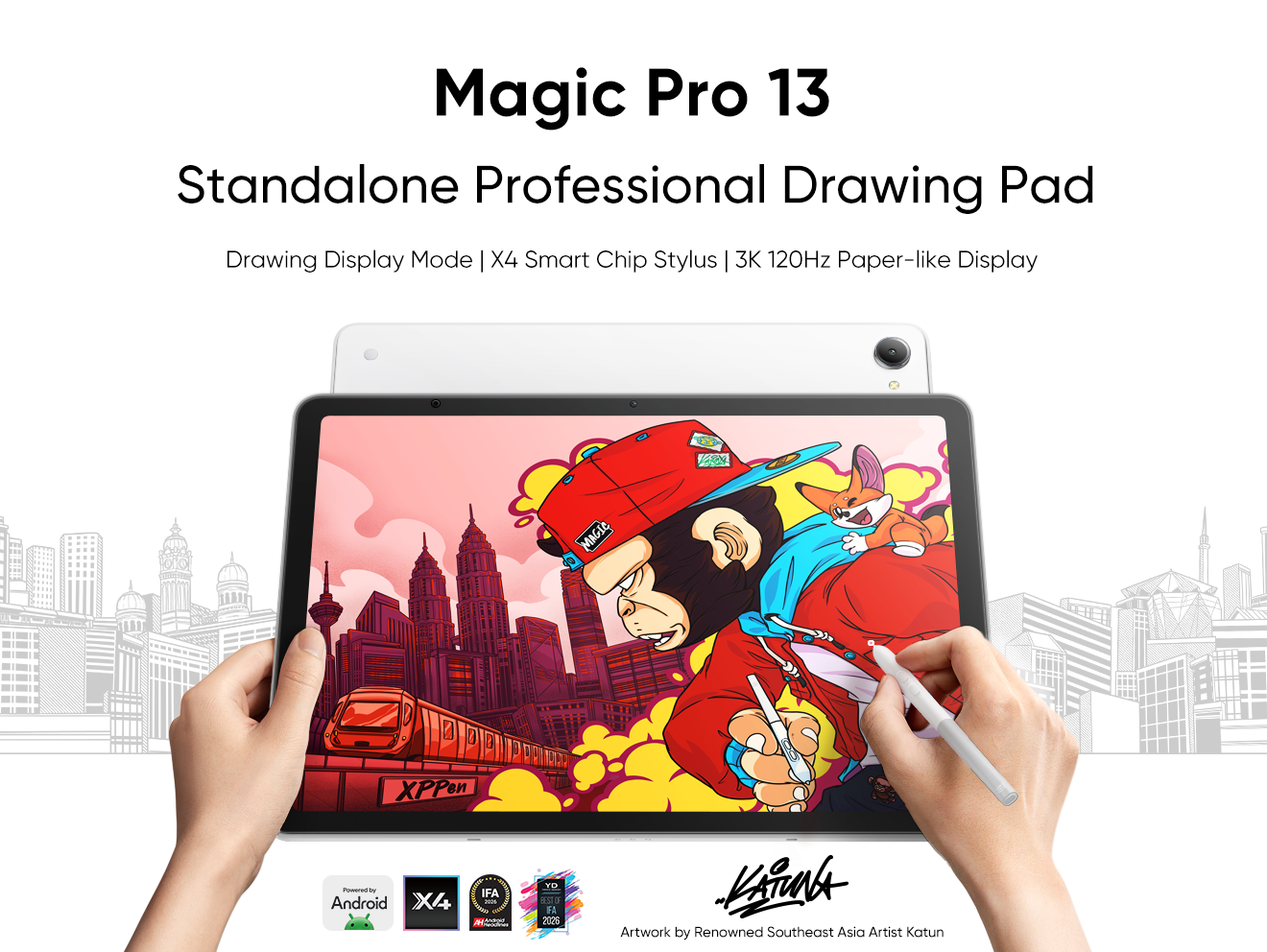


-
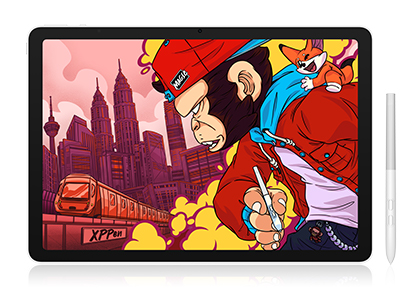 Magic Pro 13
Standalone Android 16 Drawing Pad, No Computer Required
3K 120Hz Display with 100% sRGB Color
X4 Smart Chip Stylus with 16K Pressure Levels
One-Cable PC Drawing Display Mode
It features:
Best standalone drawing pad for professional creativity anywhere
-
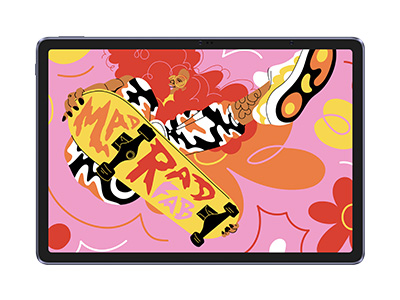 Magic Drawing Pad
X3 Pro Slim Stylus with 16,384 pressure levels and tilt support
X-Paper display featuring anti-glare and fingerprint resistance
Clip Studio Paint and ibis Paint X 3-month free membership
Super portable- just 6.9mm thin and weighs only 590g
Supports dual Windows and DP-IN functions
It features:
Powered by Android 15, no need to connect to a computer to use.
-
Magic Pro 13
Standalone Android 16 Drawing Pad, No Computer Required
3K 120Hz Display with 100% sRGB Color
X4 Smart Chip Stylus with 16K Pressure Levels
One-Cable PC Drawing Display Mode
It features:
Best standalone drawing pad for professional creativity anywhere
-
Magic Drawing Pad
X3 Pro Slim Stylus with 16,384 pressure levels and tilt support
X-Paper display featuring anti-glare and fingerprint resistance
Clip Studio Paint and ibis Paint X 3-month free membership
Super portable- just 6.9mm thin and weighs only 590g
Supports dual Windows and DP-IN functions
It features:
Powered by Android 15, no need to connect to a computer to use.
Ready to invest in the right tools?
Get expert buying advice, unbiased reviews, and exclusive deals on drawing tablets, and accessories.
